
World Cup 2026 Rankings Update: Which Team Leads After the First Two Matches?
The 2026 FIFA World Cup has already delivered several major surprises to football fans worldwide after just its opening two rounds of matches. While several powerhouse teams are demonstrating their strength, others have outperformed expectations, solidifying their positions in the power rankings. These new rankings are being determined not merely by reputation or past achievements but by evaluating current form, player performance, strategy, and the ability to perform under pressure.
After two matches, the biggest question is, who is currently the strongest team in the world? Have the defending champions maintained their supremacy, or has a new team ascended to the number one spot? The opening matches have made it clear that the 2026 World Cup is set to be fiercely competitive.
Who is Number 1? Argentina Once Again Displays a Champion’s Mentality
Argentina stands out as a top contender in the power rankings after two matches. The team’s consistent performance in major matches over the past few years has elevated it to a different level. They possess an excellent blend of experience, youthful energy, and superb cohesion.
Argentina’s greatest strength lies in its balanced squad. Rather than relying solely on star players, the entire team operates as a unified force. A solid defense, midfield control, and a rapid attack have made them highly effective in the opening games. Their experience in handling pressure during major tournaments also gives them an edge over other teams.
Although the tournament is far from over—and one or two poor performances could alter the rankings—early signs indicate that Argentina remains one of the prime contenders for the title.
Brazil’s Comeback and Renewed Energy Raise Hopes
Brazil has always been one of the most talked-about teams at the World Cup. In 2026, too, the team has demonstrated through its performance that it poses a threat to any opponent. Brazil has impressed in the opening matches with its attacking prowess and fast-paced style of play.
An aggressive playing style is the hallmark of this team. Brazilian players excel at ball control, rapid passing, and creating scoring opportunities. Once this team finds its rhythm, any defense in the world can find itself in trouble.
However, the biggest challenge for Brazil will be maintaining consistent performance. A brilliant start in the World Cup isn’t enough; mental resilience during the knockout stages is equally crucial. If Brazil sustains its current form, it could climb even higher in the rankings.
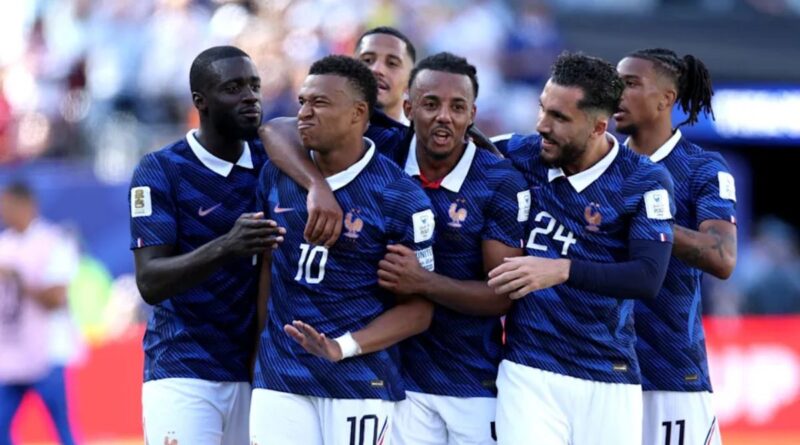
France’s Strength Remains Intact
France is consistently regarded as one of the most formidable teams in major tournaments. Thanks to a superb blend of youth and experience, the French squad possesses the ability to stage a comeback in any match.
In their opening two games, France demonstrated an ability to adapt to varying conditions. The team’s fitness, pace, and tactical flexibility set it apart. Strategic planning by the coaching staff is also one of the team’s greatest assets.
For France, the key will be minimizing errors in high-stakes matches. While the team has made strong starts in recent tournaments, minor mistakes in the final stages can prove costly.
Spain and Germany Also Establish a Strong Foothold
European powerhouses Spain and Germany also appear strong in the power rankings following their initial performances. Spain has long been defined by its passing game and technical style of play. The team has continued to impress with its approach in 2026.
Young talents are injecting fresh energy into the Spanish squad. Retaining possession for long periods and exerting pressure on the opposition remain central to their strategy.
Meanwhile, Germany has shown it is ready to make a comeback on the big stage. After facing criticism in recent years, Germany has overhauled its style of play. The team now appears to be playing a faster, more aggressive, and modern brand of football.
The US team also springs a surprise.
As one of the hosts for the 2026 World Cup, the USA is under the global spotlight. The home advantage and the energy of young players have transformed the USA into a formidable team. The American team stands out due to its fitness, pace, and attacking mindset. In the opening matches, the team demonstrated that it aims to advance based on the strength of its game, rather than simply by virtue of being the host nation.
If the US maintains its composure in high-pressure encounters, it could emerge as one of the tournament’s biggest stories.
Some major teams currently lagging behind
As with every World Cup, some major teams have failed to perform up to expectations in the early stages. In football, merely having star players does not guarantee victory; team chemistry, fitness, and the right strategy are crucial.
Some teams still need to address their shortcomings. The landscape could shift after the initial group stage matches, as a team’s true strength often reveals itself during the knockout rounds.
Power rankings mean more than just wins
World Cup power rankings are not determined solely by the points table. They also factor in team performance, the quality of opponents, player form, and control during matches.
A team that secures a big win against a weak opponent is not necessarily superior to one that triumphs after a hard-fought battle against a strong rival. Therefore, the rankings following the first two matches serve merely as an indicator, not a final verdict.
What lies ahead for the 2026 World Cup?
As the tournament progresses, the pressure will mount, and the true contenders will emerge. Teams like Argentina, Brazil, France, Spain, and Germany will remain the focus of conversation, yet the greatest allure of football is that any team can rewrite history on any given day.
For now, following the opening two matches, Argentina appears to be the strongest contender; however, the 2026 World Cup still has many thrilling twists and turns in store. The upcoming matches will determine who ultimately holds the top spot.
FAQs
Q1. Which team is leading the World Cup 2026 power rankings after two matches?
A. The top spot is currently being debated among the strongest teams, with early performances, form, and match results deciding the rankings.
Q2. Are World Cup 2026 power rankings based only on wins?
A. No, rankings consider overall performance, team form, player impact, tactics, and strength of opponents.
Q3. Can the No. 1 team change later in the tournament?
A. Yes, the rankings can change as teams play more matches and face tougher competition in the World Cup.